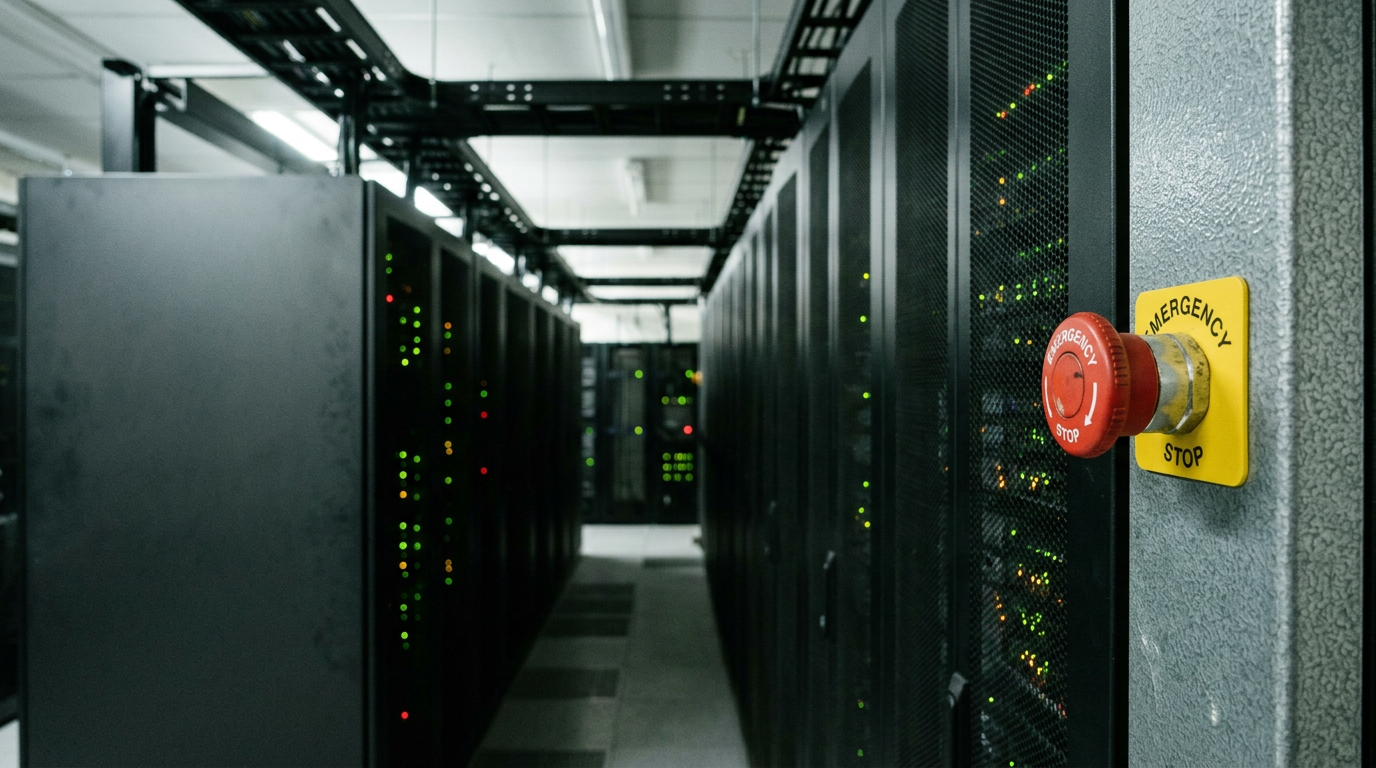



Last week the story was proof. Anthropic posted its first operating profit, OpenAI's system cracked an open math problem, and the field finally had receipts.
This week the story is price.
Inside a single week, Anthropic raised $65 billion, arranged $36 billion in debt to buy chips, and filed to go public. GitHub started charging for Copilot by the token. DeepSeek made commodity pricing permanent. And down the road in Raleigh, lawmakers spent Tuesday fighting over who pays the power bill for all of it.
The free lunch is over. Not because anyone announced it. Because the meters turned on, all at once, on every part of the stack.

⚡ The Big Story: Anthropic Stacked Equity, Debt, and an IPO in One Week
Two weeks ago I flagged Anthropic's $900 billion valuation and a roughly $30 billion round that was supposed to close by the end of May. It closed. It just closed a lot bigger. Last Thursday the company said it raised $65 billion in a Series H at a $965 billion post-money valuation, which pushed it past OpenAI for the first time. Altimeter, Dragoneer, Greenoaks, and Sequoia anchored the round, the kind of crossover investors who tend to show up right before a company goes public. Demand was heavy enough that some on the buy side started muttering about froth.
That was the equity. Then came the debt. Blackstone and Apollo are syndicating about $36 billion in financing to buy Google's custom TPU chips and lease them to Anthropic through a special-purpose vehicle. It would be one of the largest private-credit deals ever done, and the biggest of its kind tied to chips. Order books opened last week, with a close expected within days.
The part worth slowing down on is the backstop. Broadcom, which co-designs those Google chips, is providing residual-value support on roughly $31 billion of the senior debt. In plain terms, if Anthropic stops paying its lease and the used chips don't fetch enough on resale, Broadcom eats the difference. A chipmaker is, in effect, guaranteeing demand for its own chips. You can read that as smart structuring or as a flashing yellow light, depending on whether you think the demand holds.
Step back and the reason for doing this with debt instead of equity comes into view. Buying tens of billions of dollars in chips outright would burn the cash Anthropic just raised. Routing the hardware through a separate vehicle, funded by Blackstone and Apollo's debt investors and backstopped by Broadcom, keeps the chips off Anthropic's own books and saves the Series H money for the part that actually compounds, which is research and the next models. It's the move airlines make when they lease planes instead of buying them. The difference is that nobody worries a jet will be worthless in three years, and a lot of people worry exactly that about an AI chip.
Then on Monday, the third move. Anthropic confirmed it had filed confidentially for an IPO, a draft S-1 that could value the company in the trillion-dollar range. The filing "gives us the option to go public after the SEC completes its review," the company said. Tucked into the coverage was the number that matters most. The company is now running at a revenue run-rate around $47 billion, up from roughly $10 billion a year ago. And the valuation curve is just as steep. Back in December this was a $183 billion company. Six months later it's knocking on a trillion. That's the pace we're dealing with.
Anthropic isn't alone in the queue. SpaceX filed back in April and is targeting something near $2 trillion. OpenAI, last valued at $852 billion in late March, has its own confidential paperwork in motion and is eyeing a fall debut. Three trillion-dollar listings, all racing the same window, all about to ask public markets a question private investors have been answering with cash for three years.
There's a strategic reason to move first. Fortune spelled out the chess logic plainly, that whichever lab reaches public markets ahead of the other could soak up investor demand and leave its rival raising into a tired room. Worth remembering, though, that a confidential filing is still a maybe. It can be pulled at any time, and plenty of them quietly go nowhere. Anthropic could debut this summer, this fall, or not at all.
My take: The profit proof from last week was real, and a $47 billion run-rate is not a rounding error. But stacking a $65 billion round, $36 billion in debt, and an IPO filing into the same few days, on a company still pouring everything it has into compute, is an enormous amount of financial engineering to absorb at once. The Broadcom backstop is the tell. When the company that builds the chips also has to promise someone will want them, that is either prudence or circular logic, and we won't know which until the demand curve is tested. The IPO is the piece I actually care about, because it ends the guessing. A confidential filing becomes a public balance sheet in a few months, and then we find out whether the unit economics work or whether this is the most expensive story markets have ever told themselves.
💻 The Other Big Story: The Meter Just Turned On for AI Coding
On Monday, GitHub flipped 4.7 million paying Copilot users from a flat monthly fee to token-based billing. They call the new currency AI Credits, where one credit is a penny and your monthly subscription now buys a credit allowance rather than unlimited access. Plain code completions stay free and unmetered. The agentic features, the ones doing the heavy lifting, now run on the meter.
The reaction was loud and immediate. Power users running long agent sessions posted projections of 10x to 50x increases, with screenshots showing monthly bills jumping from $29 to $750, or $50 to $3,000. TechCrunch called it the end of Copilot's golden age, at least for the solo developer. There's a second meter hiding in the details too. Copilot's automated code review now burns GitHub Actions minutes on top of the credits.
The honest counterpoint, made loudly by other developers, is that only wasteful workflows blow up the bill. Use the tool with care and the cost stays sane. There's truth in that. Token billing exposes the waste that flat pricing quietly absorbed. But the whole promise of these tools was that iteration is cheap and you should experiment freely, so scolding people for experimenting feels a little convenient. And one detail explains the timing better than any product narrative. Per reporting on internal Microsoft documents, the weekly cost of running Copilot had nearly doubled since January.
Back in #019 we talked about AI as substitution. This week substitution got a price tag. In the same stretch, Cognition raised $1 billion at a $26 billion valuation, with its agent Devin now writing about 90% of the company's own code. One customer, Mercedes-Benz, used Devin to modernize a legacy system in eight days that the company estimated would have taken eight months. So the agents are doing more of the work, and the work is being metered, both at the same time. And GitHub won't be the last to flip the switch. Cursor, Replit, and every other assistant riding on the same underlying model costs will face the identical math, probably before the year is out.
My take: For anyone building, the era of AI as a fixed line item is ending. Budgeting moves from per-seat to per-token, which means the margins on your product now ride on someone else's inference bill. The teams that win this next stretch won't be the ones using AI the most. They'll be the ones who know what every agent call costs and route accordingly, cheap models for cheap tasks and the expensive ones only when it counts. The meter is the message.
🎯 Quick Hits
- An AI agent ran an entire break-in by itself. Sysdig's threat researchers say they caught the first intrusion driven start to finish by an LLM agent. It exploited a public notebook server, harvested cloud credentials, found an SSH key in a secrets manager, and dumped an internal database, all in under an hour, with no human choosing the next step. As Sysdig's Michael Clark framed it, attackers aren't being replaced by AI, they're upgrading their tooling. The security war we've tracked since #020 just stopped being theoretical. Read →
- Frontier AI is now priced like a commodity, on purpose. Late last month DeepSeek made its 75% discount on the V4-Pro model permanent, locking output at $0.87 per million tokens, dozens of times cheaper than the top US models. The promo timer that was supposed to expire just got deleted. A discount that never ends is a price floor, and it's pointed straight at everyone routing API traffic. Read →
- CNN became the first TV network to sue an AI company. Last Thursday it filed in Manhattan federal court, accusing Perplexity of copying more than 17,000 of its stories, photos, and videos to power a competing product. Perplexity shot back with four words, that you "can't copyright facts." CNN joins the Times, the Journal's parent company, and a growing line of publishers already suing the same outfit. Read →
- Wikipedia's volunteers are threatening to walk out. After the Wikimedia Foundation disbanded the engineering team that builds editor-requested tools and pushed out the longtime lead developer of the software behind the site, around 600 volunteer editors signed a solidarity pledge. Some are floating an editing strike, others want to swap fundraising banners for protest messages. The wrinkle is that all the bargaining power here comes from unpaid contributors, while the Foundation sits on nearly $300 million in reserves. Read →
- SoftBank is dropping €75 billion on data centers in France. Masayoshi Son announced the commitment over the weekend at Macron's Choose France summit, starting with €45 billion to build 3.1 gigawatts of capacity in the north of the country by 2031. It's the largest AI infrastructure bet in Europe so far, and a reminder that the compute buildout is now a national-industrial project, not a tech-company line item. Hold that thought for the local section. Read →
💭 One Thing I'm Thinking About
For three years, almost everything in AI has been sold below what it costs to run. Free coding assistants. Inference priced to win share. Compute paid for with other people's equity. The product felt like magic partly because someone else was eating the bill.
This week the bill started showing up, on the layers that had hidden it longest. Usage got a meter at GitHub. Capital got real terms at Anthropic, where syndicated debt and an IPO filing replace the easy money of a private round. And the cheapest frontier model on the market has already made its rock-bottom price permanent, so the floor was set before the meters even switched on. None of it was coordinated. It all surfaced inside the same short stretch, which is usually how an era actually ends.
Here's what I keep turning over. Making the price visible should, in theory, cut the waste. But cheap and metered usually means people use more, not less. That's the bet under Cognition's $26 billion valuation and under every usage-based pricing page. When AI gets cheaper per unit, the thinking goes, demand grows faster than the price falls. If they're right, the meter doesn't shrink AI. It just makes the cost legible for the first time.
And the IPO is the biggest meter of all. A confidential filing today becomes a public balance sheet in a few months. Last week we learned AI can turn a profit and crack a problem mathematicians couldn't. This week we started learning what that costs. Proof and price, one week apart. That's the whole map of where we are right now.

📍 Local Angle: Who Pays for the Data Centers? Raleigh Is Arguing About It Right Now
SoftBank can write a €75 billion check for data centers in France. The version of that story in our backyard looks very different, and it played out at the legislature on Tuesday.
The NC House advanced a data-center bill that would put real guardrails on the buildout. Large data centers would have to use closed-loop cooling systems that recycle water instead of evaporating it, file noise studies before they break ground, and cover their own infrastructure and energy costs so those costs don't land on households. One of the bill's authors, Rep. Matthew Winslow, framed it as making data centers "pay their fair share."
The stakes here are not abstract. North Carolina ranks ninth in the country for data centers, with around 91 of them, and Duke Energy projects that data-center power demand could roughly double over the next decade, from about 3 gigawatts to nearly 6. Duke is already asking regulators for an 18% rate hike, and just 24% of North Carolinians told an April Elon University poll they'd want a data center built near them. Governor Stein has been clear that data centers should pay their own way, and he wants to end the tax break that lets them skip sales tax on the power and equipment they buy. Senate leader Phil Berger has signaled he agrees on the tax piece.
It's messier than a clean "make them pay" story, though. The same bill carries two provisions that worry clean-energy advocates. One would delay retiring coal plants until utilities lock in approvals for new nuclear, and another would study the state's 2050 carbon-neutrality goal, which some read as a first step toward dropping it. So a fight about who pays for compute is quietly also a fight about the state's energy future.
The Triangle's edge in AI was never going to come from out-building the Bay Area on models. It comes from applying this stuff inside regulated industries, and from getting the boring infrastructure questions right. Who pays for the grid is exactly that kind of question. Get it wrong and the AI boom shows up on residential power bills. Get it right and the region keeps the jobs without the backlash.
📅 What's Coming
- June 8 to 12 — Apple's WWDC. The keynote on the 8th should lay out iOS 27 and Apple's AI roadmap, and it's probably the next big keynote moment after a quiet stretch from Cupertino.
- This summer — Watch the IPO calendar. SpaceX has filed publicly and is set to debut within days, OpenAI's own paperwork is in motion, and now Anthropic has joined them. Whoever debuts first may well raise on better terms.
- August 2 — The EU AI Act's next phase takes effect, with obligations for general-purpose models and penalties that can reach a slice of global revenue.
- Through August — GitHub's temporary promo credits for Business and Enterprise customers run out at the end of summer. That's when the real Copilot bill arrives for teams.
That's the week the meters turned on. See you next Wednesday.
Daniel
BullCity AI · Durham, NC
P.S. If you build on Copilot, Cursor, or any agent, hit reply and tell me what your token bill did this month. I'm collecting real numbers for a future issue, and the spread between "barely moved" and "10x" is the whole story.
P.P.S. Forward this to the one person on your team who still thinks AI is a flat monthly cost. They're about to find out otherwise.